From your GPU
straight into your wallet.
Solo mining without custody. Private by default – no name, no address on public pages unless you choose. Traceable from your first hash to your final reward.
- GPU≈ 1.5 GH/sQuantus-farm #RTX5090 · hash below target
- SHAREdiff 1–50 Gcustom & vardiff · PoW
- NODEcheckedQuantus Node LIVE · your address inside
- BLOCK–latest block · –
- NETWORK–half the network · –
- WALLET–your wallet · –
- No custodyRewards go straight to your own address. No pool balance, nothing to withdraw.No custodyYour own payout address is written into the block template of every worker. When your rig finds a block, the chain pays the reward directly to you – the pool never holds your coins. Pool fee: – (hard cap 3%).
- Private by defaultPublic pages show an anonymous miner name. Your own name only if you choose one.Private by defaultOn public pages you appear as “Miner #…” until you set a public name in the Mining Dashboard. No logins, addresses or worker names are shown. Miners connect encrypted (TLS, port 3335), so worker names, tokens and shares stay private on the way. Peer IPs and IDs never leave the server – map locations are rounded.
- Gain full control of your workDifficulty, pauses and connections – per worker, set by you.Gain full control of your workDifficulty: VarDiff or a fixed share difficulty per worker (–).
Price guard: pauses a worker while QTC is below your price or profit threshold – the pool disconnects it, and your miner either waits with idle GPUs or switches to its backup pool. Never on by default.
Your call: add or retire workers and issue new tokens at any time. - Built-in accountingHashrate per worker, shares, blocks and rewards – every figure traceable.Built-in accountingHashrate per worker with an honest ± uncertainty, accepted / stale / rejected shares, your blocks with their status (in chain → final) and exact rewards read from the chain. Tax report and CSV exports in five languages.
- Rented GPUs includedVast.ai rigs with honest hashrate estimates and cost against revenue.Rented GPUs includedConnect a read-only Vast.ai key: cost per hour next to the measured hashrate and expected revenue of each rented rig. Costs are recorded hourly for your tax export.
- Live network viewSee how fast every block spreads across the network, measured by our node.Live network viewRight now: – peers in – places. Every block is timed until half the network has it; our node’s median over 24 h: –.
Server status & health
Past incidents
Built in the open, week by week.
Every version and what it brought. Newest first.
- Loading …
Every block, as it happens.
Where each new block first appeared, how fast it travelled through the network and when our node had it.
Latest block
Waiting for the next block …
- First report
- 0 s
- Our node
- –
- Half the network
- –
- Almost all (90%)
- –
Recent blocks
measured from the heights peers report to our node| Block | Time UTC | First seen | Found by | Spread · half the network | Our node | Speed |
|---|---|---|---|---|---|---|
| Waiting for the next block … | ||||||
Blocks found by our pool
| Block | When | Miner | Reward | Status |
|---|---|---|---|---|
| No blocks of ours recorded yet. | ||||
Credited at once, final after 100 blocks (about 20 min) – until then a competing block with more work could still replace it. Miners appear by their public name or as an anonymous “Miner #…”; the reward goes straight to the finder’s wallet.
Statistics
Who mines on this node.
Everyone here mines solo into their own wallet. The node checks every share and writes each miner’s own address into the block.
Scoreboard
Miners on this node, ranked by average hashrate. The bar compares each miner with the leader.| # | Miner | Hashrate vs #1 | Hashrate | Share | Blocks | Luck |
|---|---|---|---|---|---|---|
| Loading … | ||||||
Luck = blocks found ÷ blocks expected from the miner’s hashrate in the selected period. Above 100 % lucky, below 100 % unlucky; with less than one block expected it says little yet, so it stays grey.Miner #… = no public name set. No logins, addresses or worker names are shown.
Pool blocks
The last 10 blocks found on this node – each paid straight to the finder’s own wallet.| Block | When | Found by | Reward | Status | Explorer |
|---|---|---|---|---|---|
| No pool blocks recorded yet. | |||||
Final = can no longer be replaced (100 blocks deep, about 20 minutes). Replaced = another miner’s block at the same height won; no reward.
What will your GPU do?
20 GPUs and 5 miners, measured against this pool's own node: 15 minutes per run, stock power limits, 89 runs in total. Pick your card.
Start your miner★ our pick
–sudo on Linux or “Run as administrator” on Windows. Only use it if you know the settings for your card.
YOUR_WORKER and YOUR_WORKER_TOKEN with a worker from Workers – the token is shown once when you create it. The pool never hosts or ships miner programs.
All GPUs
Measured 30–31 Oct 2026 on rented Vast.ai GPUs, stock clocks; host power caps vary, we report the power the card actually drew. Your hashrate can differ by a few percent. *Rent: lowest Vast.ai price on 31 Oct 2026; “–” = not recorded. **Expected: hashrate × 86,400 ÷ current network difficulty × last pool block reward – an average, luck varies.
Mine Quantus straight into your own wallet.
Six short steps from a new account to your first accepted share. Every block your rigs find pays your address directly – the pool never holds your coins.
Create your account ✓ done
Create it with a passkey – no name and no password needed – or pick a username and a strong password. No e-mail needed.
Set up the official Quantus Wallet ✓ done
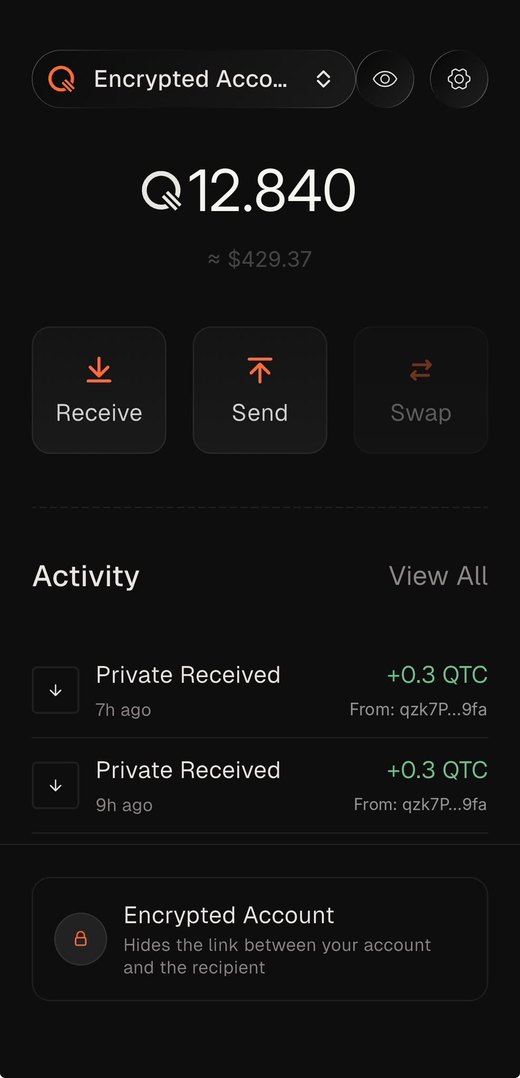
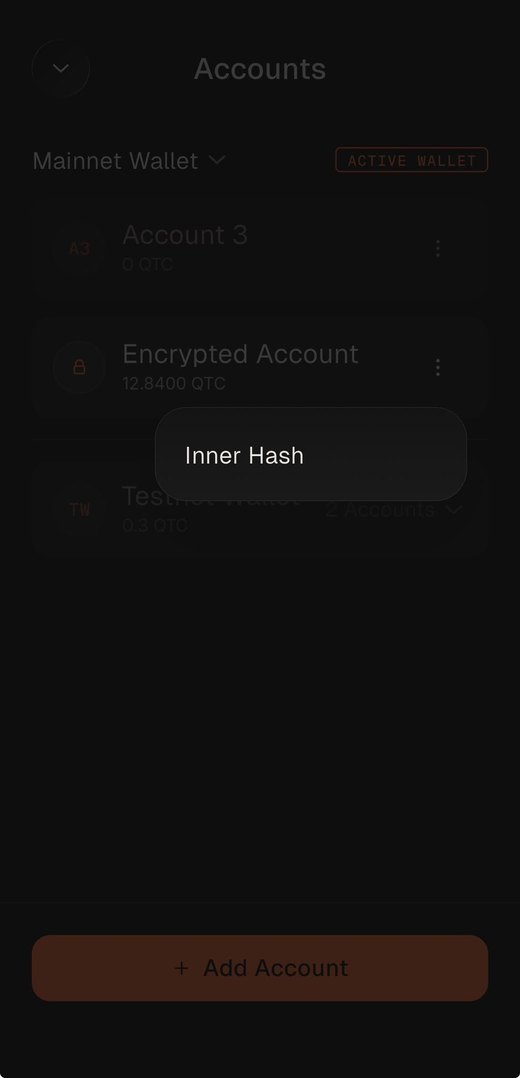
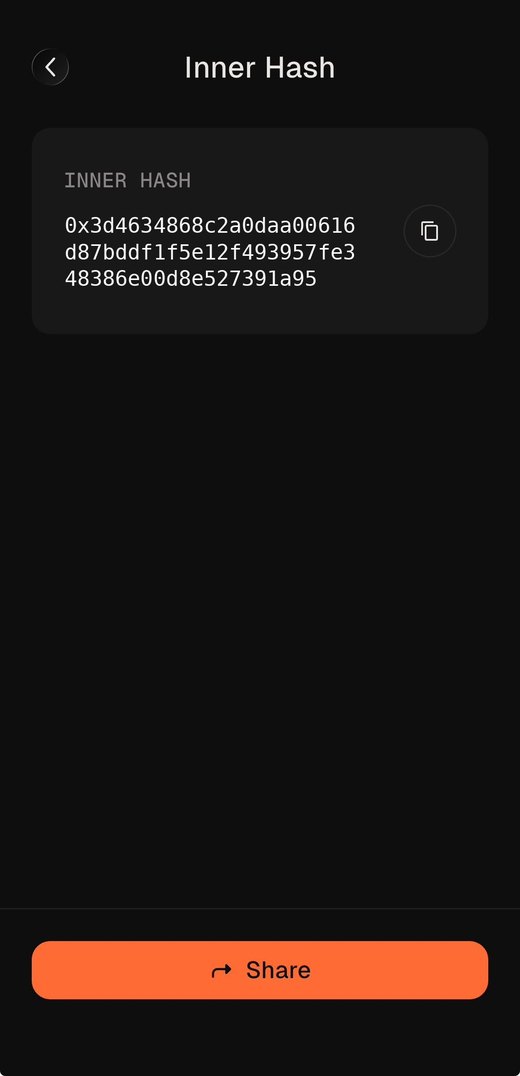
Your rewards go to your own wallet, not to us. You need the free Quantus Wallet app by Quantus Labs on your phone. In it you create the wallet and copy its inner hash – that is all this step needs.


Paste it as your payout ✓ done
In the Mining Dashboard open Reward destination, paste the inner hash, add a note if you like and confirm with your password (or your passkey). Check the first and last characters against your wallet before you confirm.
One worker per rig ✓ done
Give it any name you like – e.g. rig01 or garage-3090 – and choose its reward destination. Only then the token appears: it is the miner's password and is shown once. Copy it and press Done – without Done it is discarded.
Download and start your miner ✓ connected
The miner is a small program from an independent developer that puts your graphics card to work. Five short steps – about 3 minutes.
- 1
Pick your graphics card – and your miner
All five miners were measured on every card against this pool. We preselect the fastest stable one; you can take any other.
- 2
Download the miner from its official page
The button opens the developer’s release page on GitHub. We never host miners ourselves.
- 3
Unpack it into its own folder
- 4
Create the start file
- 5
Start it
 Download from GitHub ↗
Pool stratum+ssl://…:3335 · username = worker name · password = its token. Stuck? “Something not working?” below covers the usual problems.
Watch the first share arrive ✓ done
This step turns green on its own as soon as the pool accepts the first share – usually within a minute or two.
Something not working?
Linux: double-clicking start.sh fails (“format error”, or only an empty terminal opens)
The file manager could not start the script – e.g. because the folder name contains a space or the file is not marked as a program. The miner did not run. In that terminal type sh start.sh. For the future, move the miner into a folder without spaces, e.g. ~/miner, and start it from the terminal with sh start.sh.
The miner cannot connect
Use the pool address above with TLS on port 3335 – the unencrypted port is closed. Use the host name, not an IP address: the certificate is issued for the name.
Connected, but the login is rejected
The token is wrong or was replaced. Under Workers press New token, copy it, press Done and put it in the password field of the miner. A token without Done never becomes valid.
The worker shows “not mining”
It has no payout yet. Under Workers choose your confirmed reward destination for it.
Online, but no shares for a long time
Small GPUs can take a while at the starting difficulty. Under Workers → Difficulty you can set a lower fixed value.
Accounts are not enabled on this node
The operator has not configured the account system yet.From your GPU straight into your wallet.
Billions of tries, one winner. When it is yours, the reward goes straight to your own address – no pool balance, nothing to withdraw.
Sign in to your node
Welcome back. Pick the way you signed up.
Overview
–
Hashrate
Workers
Manage workers →| Worker | Status | Hashrate · 6 h | Efficiency | Accepted | Stale · rejected | Price guard | Last share |
|---|---|---|---|---|---|---|---|
| Loading … | |||||||
Recent activity
All activity →Account
Verify my block
Your luck – and what it earned
Every block you found in this period
Per month USD, rewards valued when received
Luck, 7-day rolling found ÷ expected, last 90 days
| Worker | Blocks | Rewards | Electricity | Rent | Net | Net / day |
|---|---|---|---|---|---|---|
| Loading … | ||||||
Reward destination
Two-factor authentication
Password
not setConnected accounts
Passkeys
Account name
Don't lock yourself out: if this device is lost, the passkey is gone too. Add a second passkey (another device or a security key) or set a password under Security.
Public name
Signed-in devices
Workers
stratum+ssl://…stratum+tls:// or a TLS option instead; the port 3335 is what matters.
The unencrypted port 3334 is closed. A miner still set to stratum+tcp://…:3334 cannot connect any more: switch it to the TLS address above and press New token for that worker – the old token was sent unencrypted.
Alerts
Get a message when a worker stops, when you find a block and when the price guard pauses a worker. Nothing is sent until you connect a channel below.What to tell you
Where to send them
Recent alerts
last 20 · kept for 90 daysActivity
blocks found by your workers and changes to your accountGPU monitoring · Vast.ai
- On cloud.vast.ai → Keys click +New and choose read-only permissions only (instances and account: read). Never use a full-access key.
- Optional but recommended: restrict the key to this pool server's IP address.
- Give each instance the same label as its worker here (e.g. rig01) – they are matched automatically. You can also pick the worker below.
Key settings
Stop instances during pauses (optional, advanced)
Export & tax report
every block reward with amount, price and value at the time it was receivedOperator ledger
| Time | Type | Account | Height | Amount | Balance |
|---|
Admin settings
Sign in with an admin account that has two-factor authentication enabled.Overview
Operator tools
via tunnel onlyssh -L 18081:127.0.0.1:18081 <your-server>
Then open http://localhost:18081/#admin and sign in there.
System health
Needs attention
All irregularities →Pool right now
Recent admin activity
Shortcuts
Node & alerts
Node status
Active alerts
Alert thresholds
Recent alerts
Irregularities
Entries
Analytics
Blocks, luck & accounts
CSVAccounts
Miners
Accounts & connections
Pool fee
Current fee & changes
cap 3 % · increases need 24 h notice · decreases apply at onceStratum & difficulty
Worker difficulty
range users can choose for a fixed difficultyVarDiff & connection limits
applied live by the node – no restart, miners stay connectedNotifications
Telegram & Discord
stored in a private file (0600) on the server – never shown againSMTP settings
Send announcement
Banner
Start page banner
shown on the start pageBackups
Backup files
How to restore
Restoring is deliberately not possible with a click. On a trusted machine with the private age key:age -d -i backup-key.txt quantus-backup-….tar.zst.age | zstd -d | tar -xf - -C restore/
Check manifest.json (SHA-256 of every file), stop the container, replace the dashboard DB and config files, start again. Chain data is not part of the backup – the node syncs it again.